
Africa’s EdTech policy toolkit is unveiled in Accra as Luminaries pledge to accelerate implementation ACCRA, GHANA – June 9th 2026.
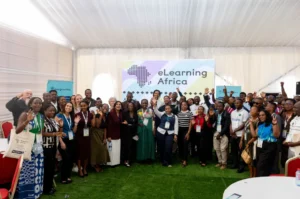
The Mwanga wa Elimu movement held its inaugural public workshop at eLearning Africa 2026 in Accra last week, bringing together policymakers, developers, researchers, educators, and funders from across Africa behind a shared commitment to transform digital education on the continent.
The workshop, Light the Way: Join Africa’s EdTech Revolution , marked the inauguration of the Africa EdTech Policy Toolkit and opened membership of the movement to practitioners continent-wide. The Africa EdTech 2030 Vision and Plan , developed by AUDA-NEPAD and affirmed at the 39th Ordinary Session of the AU Assembly in February 2026, sets out a blueprint for a unified, interoperable continental digital learning architecture, with the aim of ensuring 200 million African learners have access to quality digital education by 2030.
Mwanga wa Elimu — meaning Light of Education in Kiswahili — is the movement launched to deliver on that commitment, bringing a growing coalition of Luminaries together to drive the policy alignment, shared infrastructure, and ecosystem coordination the Vision requires.
The Africa EdTech Policy Toolkit, presented at the workshop, is a practical five-module resource covering national readiness diagnostics, core policy pillars, strategic implementation pathways, financing and procurement guidance, and a living library of country case studies drawn from Kenya, Rwanda, Ghana, Sierra Leone, Liberia, South Africa, and beyond. It is designed to inform and support national policy processes.
John Kimotho, Executive Co-ordinator of the Mwanga Wa Elimu movement, spoke plainly about what the workshop had demonstrated: “We don’t need more people who understand the problem. We need more people who are willing to work on it together.”
Dr. Joshua Valeta, Chairperson of the Distance Education Association of Southern Africa (DEASA) and Founding Luminary, addressed the room to give a personal perspective on the Vision before the formal programme began. “The children who will be in classrooms in 2030 are in schools right now,” he told the room. “We don’t have the luxury of waiting for perfect conditions or perfect policy. What we have is each other — and a movement that is serious about making this work. Come and be part of it.”
Barbara Glover, advisor to the Mwanga wa Elimu movement, and strategic advisor on the Africa EdTech 2030 Vision and Plan, spoke to the value of the community being built. “The beauty of this movement is that we are bringing together various actors from the ecosystem so that we can move the Vision forward,” she said. “Coordination starts with a room like this one.” The Luminary pledge is now open to practitioners across the continent. Luminaries — policymakers, investors, developers, researchers, and educators — commit to advancing the Africa EdTech 2030 Vision and Plan within their own spheres: contributing to shared standards, peer learning, and the collective infrastructure the Vision requires.
The pledge portal is accessible at mwangawaelimu.org . – ENDS –
